
NGINX RTMP has revolutionized how small studios and independent broadcasters stream online. Its lightweight architecture and real-time push capability allow for reliable video delivery at a fraction of traditional Wowza costs.
When properly tuned, NGINX RTMP achieves latency as low as 1–2 seconds. That’s a game-changer for anyone broadcasting sports, music events, or church services.
If you want managed NGINX RTMP servers without the technical hassle, RTMP-Server.com offers fully configured plans ready to go. You can also read more about uptime comparisons on RTMPDedicated.com.
External link: NGINX official documentation
The Power of Open-Source Customization
One of the most significant, yet often overlooked, advantages of using the NGINX RTMP module is its open-source nature. This accessibility empowers developers and engineers to customize the server to an extraordinary degree, tailoring it for highly specific use cases that proprietary solutions simply cannot accommodate. Broadcasters can integrate custom Lua scripts for on-the-fly stream manipulation, build bespoke access control lists (ACLs), or incorporate unique logging and monitoring mechanisms directly into the core server logic. This flexibility translates into a streaming platform that is not just reliable and fast, but perfectly optimized for the unique demands of a given broadcast environment, offering a level of control unparalleled in many commercial alternatives.
Scalability Through Simplicity and Efficiency
While dedicated NGINX servers offer high performance, the architecture also excels when it comes to horizontal scalability. Because the NGINX core is famously efficient and lightweight, it requires fewer system resources than more monolithic streaming media servers. This efficiency means that when a broadcaster needs to handle a massive surge in viewers, they can deploy new NGINX RTMP instances rapidly and cost-effectively, loading the same configuration files across a fleet of low-cost virtual machines. This ease of scaling, coupled with the ability to sit behind standard load-balancing solutions, makes NGINX RTMP a financially smart and technically robust choice for events with unpredictable or high peak loads, ensuring the viewer experience remains seamless.
Bridging RTMP Ingest to Modern Delivery
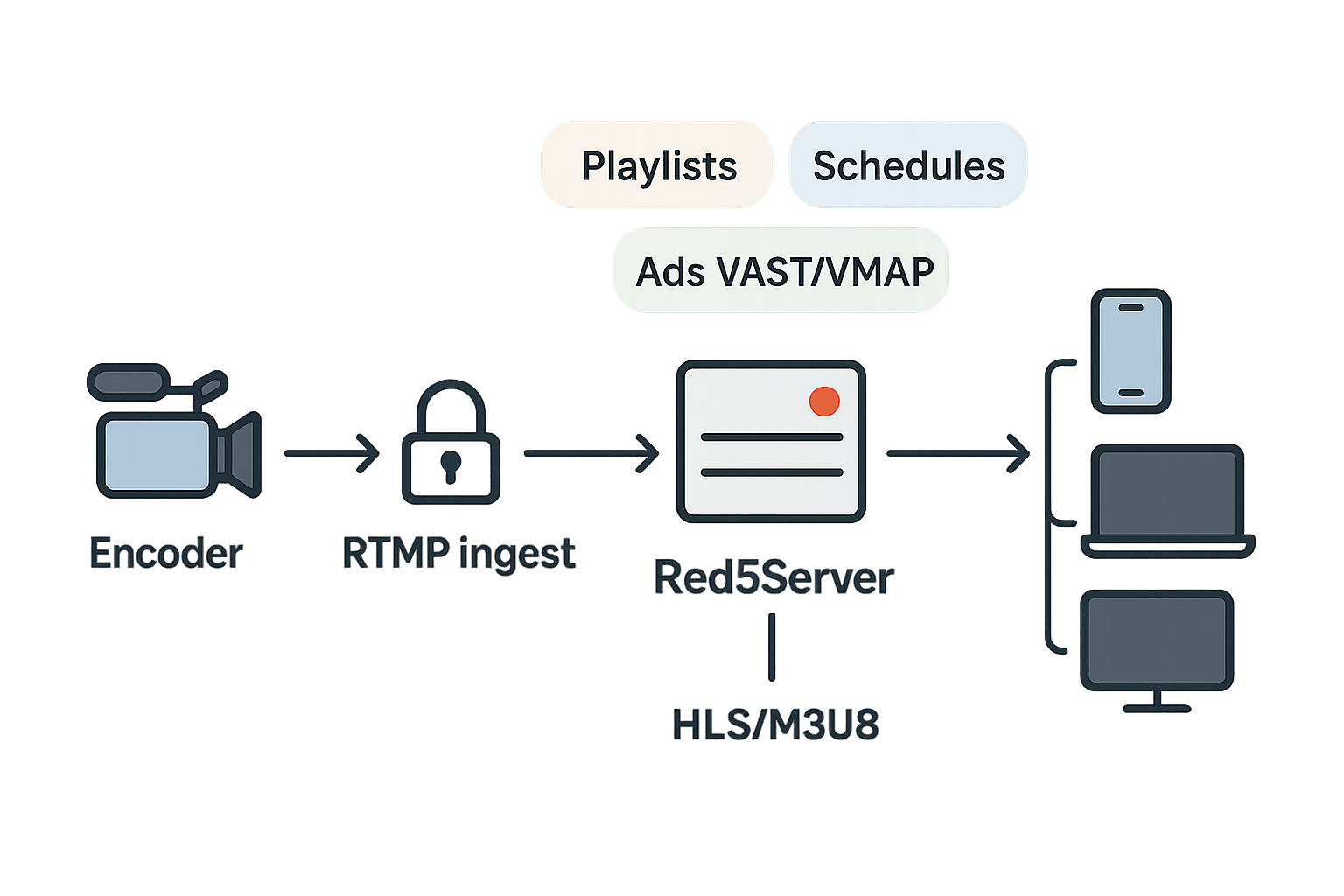
In the contemporary streaming landscape, while RTMP remains the best standard for ingest from the encoder (such as OBS or vMix), the final mile of delivery is often handled by protocols like HLS or DASH for broad device compatibility. A key function of the NGINX RTMP server is its seamless ability to act as the crucial conversion bridge. By utilizing additional modules, the server can ingest the low-latency RTMP stream and simultaneously segment and repackage it into HLS or DASH manifests. This capability transforms the simple media server into a powerful, all-in-one distribution hub, allowing independent broadcasters to maintain their preferred low-latency RTMP ingest workflow while ensuring their content reaches every smartphone, tablet, and smart TV across the globe without needing a separate conversion service.