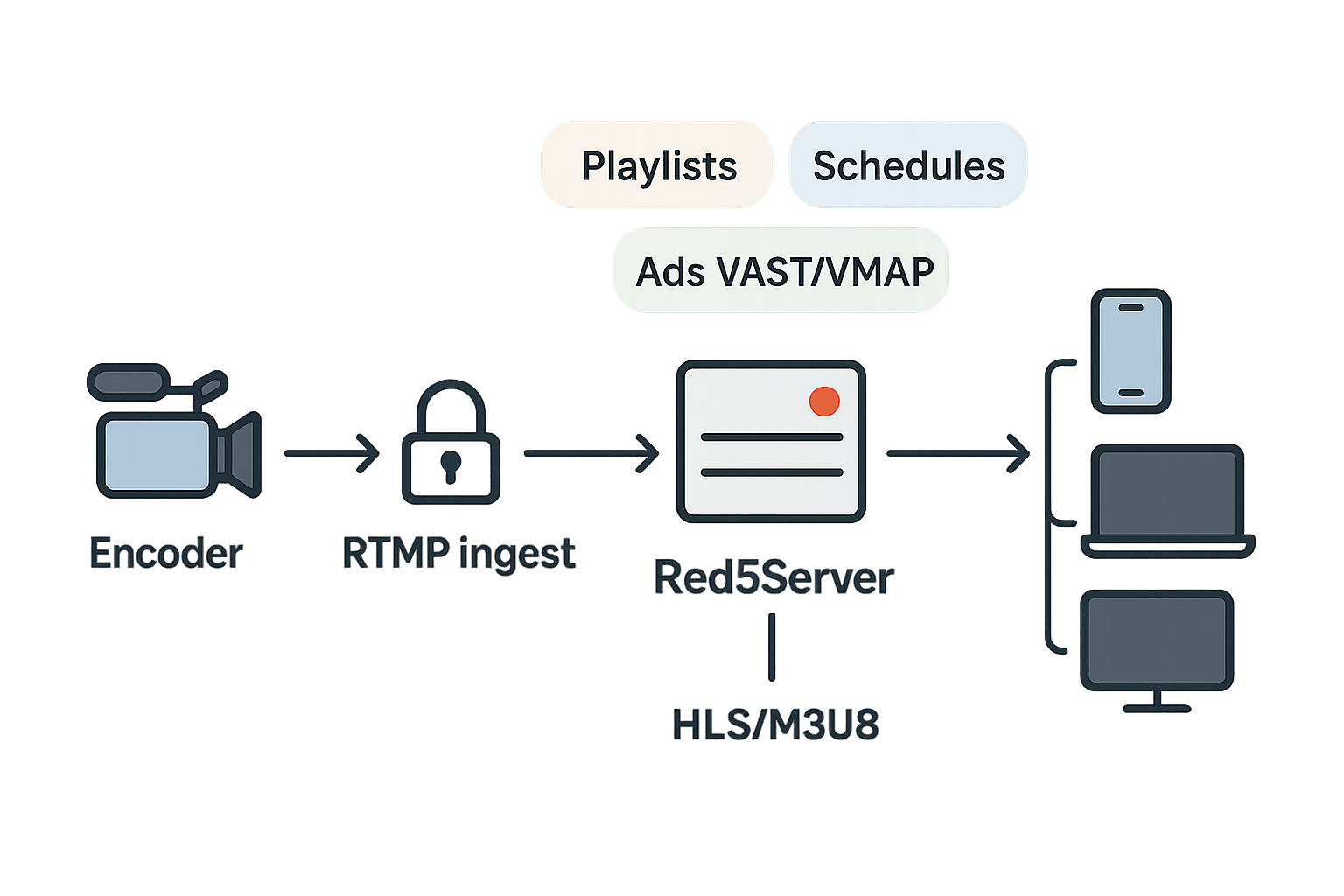

For many broadcasters, shared RTMP hosting is the first step into live streaming. It removes technical complexity and reduces costs, making it attractive for small projects, testing, or occasional broadcasts.
But shared hosting is not a one-size-fits-all solution. Understanding where it shines and where it falls short helps avoid frustration later.
What is shared RTMP hosting?
Shared RTMP hosting means multiple users stream through the same server infrastructure. Resources are allocated dynamically, allowing many small channels to coexist efficiently.
This model works well for:
- Testing stream setups
- Short live events
- Educational or internal broadcasts
- Low to moderate traffic streams
It also removes the need for server administration. Most shared RTMP services provide preconfigured endpoints that work immediately with OBS or similar encoders.
What are the limitations?
The main limitation is resource contention. While reputable providers carefully manage server load, shared environments will never offer the same predictability as dedicated servers.
Bandwidth caps, bitrate limits, or fair-use policies may apply. For growing channels, these constraints can become noticeable during peak usage.
Another consideration is customization. Shared RTMP environments usually restrict low-level server access to maintain stability across all users.
When should you upgrade?
If your stream becomes continuous, monetized, or business-critical, shared RTMP hosting may no longer be ideal. At that point, moving to a dedicated or semi-dedicated environment offers better control and scalability.
Shared RTMP hosting remains a valuable starting point, as long as it is treated as a stepping stone rather than a permanent solution.
Cost-Effectiveness vs. Hidden Risks
For those operating on a tight budget, the primary appeal of shared hosting is its low barrier to entry. It allows creators to experiment with live content without a significant financial commitment or the need to hire a systems administrator. However, as a channel grows, the “cost” of shared hosting can manifest in other ways—specifically through lost audience trust if a high-profile stream buffers or crashes due to another user’s activity. Transitioning to a more robust setup is often less about seeking new features and more about risk mitigation. When the potential loss of sponsorship revenue or viewer engagement outweighs the monthly savings of a shared plan, the investment in a dedicated environment pays for itself.
Finding the Middle Ground: The Semi-Dedicated Path
It is worth noting that the jump from shared hosting to a full dedicated server doesn’t always have to happen overnight. Many modern providers offer semi-dedicated or Virtual Private Server (VPS) options as a bridge. These environments utilize virtualization technology to provide “burstable” resources and isolated environments while still maintaining a lower price point than bare-metal hardware. This middle ground allows broadcasters to enjoy dedicated portions of CPU and RAM, providing a “safety buffer” against the fluctuations of public traffic. For a growing brand, this progression—from shared to VPS, and eventually to a fully dedicated infrastructure—ensures that the technical backbone of the stream evolves in lockstep with the audience’s expectations.